Better rideability
Improve throttle response, low-speed manners, roll-on acceleration and the way the motorcycle behaves in normal road use.
Dyno tuning | Griffith NSW
A proper dyno tune is not just about peak horsepower. It is about sharper response, stronger usable torque, smoother running and calibration matched to your actual motorcycle. Victory motorcycle dyno tuning is also available.
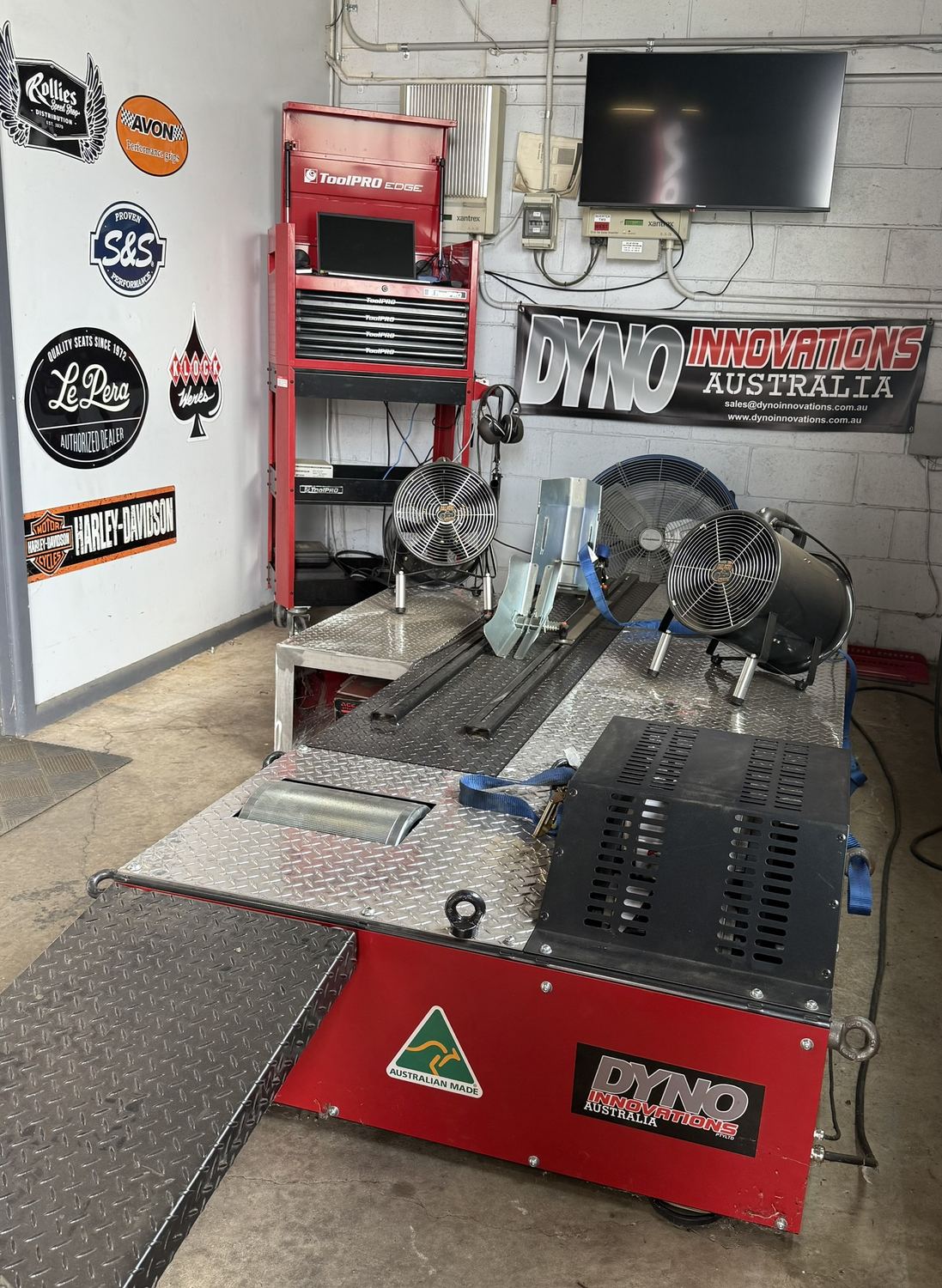
Dyno time that answers what the bike is doing.
Why dyno tune your Harley?
Whether your Harley is completely standard, has only an exhaust and air cleaner, or has cams and engine work, the calibration should match the motorcycle that is actually in front of us. Dyno tuning lets DNA measure air-fuel behaviour, torque, power and response under controlled load, then adjust the ECU to suit the engine, intake, exhaust and intended use. On the road, that can mean sharper throttle response, stronger usable torque, smoother running, less hesitation or surging and more confidence that the complete combination is working together. It is not about chasing one peak number; it is about making the motorcycle feel better everywhere you actually ride it.
Victory owners are welcome too. Whether you are addressing hesitation or surging, or matching the tune to intake, exhaust or cam changes, we focus on usable torque and smooth road manners. Include your Victory model, year, modifications and any existing tuner in your enquiry so we can confirm the appropriate tuning approach.
Improve throttle response, low-speed manners, roll-on acceleration and the way the motorcycle behaves in normal road use.
Check and calibrate air-fuel behaviour while the engine is operating under controlled load instead of relying on a stationary guess.
Shape the result around where the motorcycle is actually ridden, not simply chase the highest peak horsepower number.
Make the engine, intake, exhaust, camshaft and ECU calibration work together rather than treating each modification as a separate part.
Expose fuelling, airflow, ignition, heat or mechanical concerns that can hide behind poor response or an inconsistent power curve.
Compare repeatable runs and review the final graph so you can see what changed, where it improved and any limits that remain.
Before the run
A tune cannot repair a mechanical problem. If the bike needs condition checks, diagnostics or supporting parts first, DNA will explain that before chasing a dyno number.
Send a dyno tuning enquiryThis sends an enquiry only. It does not confirm a workshop booking.
Establish how the current combination behaves before changing it.
Use data alongside workshop checks to isolate rideability concerns.
Adjust the applicable strategy for cleaner response and usable power.
Review the result, limits and next maintenance step before handover.
What to include in the enquiry
Year, model and engine size
ECU, tuner or previous tune if known
Current intake, exhaust and cam or engine work
Symptoms, fuel used and what you want improved
Workshop contact